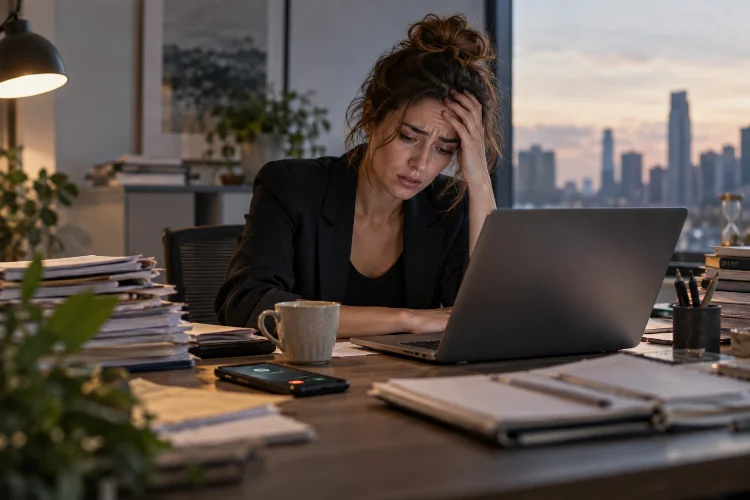
You are running late for an important meeting, your phone battery is almost dead, and traffic suddenly stops. Within seconds, your heart beats faster, your muscles tighten, and your attention becomes sharply focused on solving the problem.
That is stress doing what it was designed to do.
Stress is the body’s physical and emotional response to challenges or demands. In small doses, it can actually be useful.
It may increase alertness, encourage quick action, and help you finish an urgent task. The situation changes, however, when pressure continues for days, weeks, or months without enough recovery.
Understanding how short-term and long-term stress affect daily function helps explain why the same stress response that can improve performance temporarily may become exhausting when it never seems to switch off.
Stress can influence concentration, sleep, appetite, mood, relationships, physical comfort, and decision-making. Knowing the difference between occasional pressure and chronic stress can make it easier to recognize when your body needs recovery rather than another push.
What Is the Difference Between Short-Term and Long-Term Stress?
Short-term stress, often called acute stress, appears in response to an immediate challenge. You may experience it before an exam, during an argument, when giving a presentation, or when narrowly avoiding an accident.
MedlinePlus explains that acute stress usually disappears relatively quickly. Chronic stress, by comparison, continues over a longer period and may develop from ongoing issues involving work, finances, relationships, or health.
The body’s basic stress responce is similar in both situations. Stress hormones increase alertness, muscles tense, and heart rate may rise as the body prepares to respond.
The major difference is duration.
Temporary activation followed by recovery is very different from remaining physically and mentally alert for weeks or months.
Short-Term Stress Can Temporarily Improve Focus
Stress is not automatically harmful.
Imagine you suddenly realize that an important report is due in two hours. The pressure may make you focus more intensely, ignore distractions, and work faster than usual.
The body’s short-term stress response increases alertness and prepares you to handle a challenge. MedlinePlus notes that this reaction can help people respond to demanding or potentially dangerous situations.
This is why moderate pressure sometimes feels motivating.
However, more stress does not always mean better performance. If the pressure becomes overwhelming, concentration can begin to collapse instead of improving.
You may reread the same paragraph repeatedly, forget simple details, or jump between tasks without finishing anything. The useful burst of energy has turned into mental overload.
Chronic Stress Can Make Concentration and Decisions Harder
Long-term stress works differently because your brain does not get enough opportunities to return to its normal baseline.
The CDC lists trouble concentrating and making decisions among the common effects of stress. Long-term pressure may also influence energy, interests, sleep, and emotional well-being.
In everyday life, this may look surprisingly ordinary.
You might forget why you entered a room, struggle to organize your priorities, postpone simple decisions, or make impulsive choices because carefully thinking through another problem feels exhausting.
That does not necessarily mean your memory or intelligence has suddenly disappeared. Your mental resources may simply be overloaded by continuous demands.
When several difficulites compete for attention at once, even small tasks can start feeling unusually complicated.
Stress Can Disrupt Sleep and Daily Energy
Stress and sleep can easily become part of the same cycle.
You feel stressed, so you have difficulty sleeping. Then you wake up tired, making everyday problems feel harder to manage, which creates even more stress.
Mayo Clinic includes sleep problems, fatigue, difficulty focusing, headaches, muscle tension, and stomach upset among common stress-related symptoms.
Short-term sleep disruption after an unusually stressful event may resolve once the situation passes. Chronic stress is more concerning because repeated poor sleep can affect how you function throughout the day.
You may rely heavily on caffeine, lose motivation to exercise, become less patient with coworkers, or struggle to stay awake during routine activities.
This is one reason stress management is not simply about “feeling calmer.” Recovery can affect practical abilities such as attention, energy management, and productivity.
Mood and Relationships Can Change Under Ongoing Pressure
Stress often becomes visible through behavior before people realize how overwhelmed they are.
You may become more irritable, impatient, worried, withdrawn, or emotionally sensitive. A minor inconvenience that would normally be easy to handle can suddenly feel like the final straw.
The CDC notes that stress may contribute to feelings such as fear, anger, sadness, worry, frustration, or numbness.
These emotional changes can affect relationships.
For example, someone experiencing ongoing work stress might come home mentally exhausted and react sharply to an innocent question. Another person may stop replying to friends because social interaction feels like one more task requiring energy.
Recognizing the pattern matters because the problem may not actually be the people around you.
Sometimes the deeper issue is that your stress level has reduced the emotional space available for patience and communication.
Long-Term Stress Can Affect Physical Health
Stress is not limited to thoughts and emotions.
The American Psychological Association explains that stress can affect multiple body systems, including the cardiovascular, respiratory, digestive, endocrine, nervous, and musculoskeletal systems. The body can usually handle stress in small doses more effectively than prolonged activation.
Chronic stress may contribute to headaches, muscle tension, digestive problems, sleep difficulties, and other physical symptoms.
MedlinePlus also notes that long-term stress may increase the risk of health problems and can worsen existing medical conditions.
This does not mean every headache or stomach problem is caused by stress.
Physical symptoms can have many explanations, which is why persistent, severe, or unexplained symptoms should not simply be dismissed as “just stress.”
Still, noticing the connection between mental pressure and physical well-being can help people take chronic stress more seriously.
Stress Can Change Everyday Habits
When stress continues for a long time, people often change their behavior in ways they may not immediately notice.
Some people eat more, while others lose their appetite. Exercise may disappear from the schedule, social activities can feel exhausting, and bedtime may become later because late-night scrolling feels like the only free time available.
Stress can also influence unhealthy coping behaviors.
The CDC notes that stress may be associated with increased use of alcohol, drugs, or other substances. Mayo Clinic similarly lists changes in eating, reduced exercise, social withdrawal, and substance misuse among possible behavioral effects.
These habits may offer temporary relief without solving the underlying source of pressure.
Over time, they can create additional problems that increase stress even further.
This is why paying attention to behavioral changes can be just as important as noticing emotional symptoms.
How to Reduce the Impact of Everyday Stress
Stress cannot be completely removed from life, and that should not be the goal.
A more realistic approach is creating enough recovery that temporary pressure does not automatically become chronic.
Regular physical activity, adequate sleep, supportive relationships, relaxing activities, and realistic priorities can all help. The CDC recommends identifying stress triggers and using healthy coping strategies as part of daily stress management.
Relaxation techniques may also help some people.
The National Center for Complementary and Integrative Health describes methods such as deep breathing, progressive muscle relaxation, guided imagery, and similar techniques designed to produce a relaxation response.
You do not need an elaborate routine.
A ten-minute walk, putting your phone away before bed, taking a lunch break away from your desk, or talking with someone you trust can create small recovery periods.
The goal is to make stress more managable before it begins controlling your schedule, mood, and concetration.
If stress is persistent, feels overwhelming, affects your health, or significantly interferes with daily life, speaking with a health or mental health professional is a sensible next step.
Short-term and long-term stress can affect daily function in very different ways. Acute stress may temporarily sharpen attention and help you respond quickly to challenges, especially when recovery follows soon afterward.
Chronic stress is different. When pressure continues without enough recovery, it can interfere with sleep, concentration, decision-making, energy, mood, relationships, habits, and physical well-being.
The goal is not to eliminate every stressful situation. Instead, learn to recognize when normal pressure is becoming an ongoing pattern.
Pay attention to changes in your sleep, energy, emotions, focus, and behavior. Build regular recovery into your routine, and seek professional support when stress begins interfering with everyday life. Managing stress earlier is often easier than waiting until exhaustion becomes your normal state.